



Introduction
In modern agriculture and industrial processing, protective coatings and specialized treatments play a major role in improving efficiency and productivity. One such term that has gained attention is mannacote. Although not widely understood by the general public, mannacote has become increasingly important in certain agricultural and technical sectors.
Farmers, agricultural suppliers, and crop specialists often look for ways to protect seeds, improve germination, and enhance plant health. Products and technologies associated with mannacote are designed to help achieve those goals. By creating a protective layer around seeds or materials, mannacote helps increase survival rates and improve performance under challenging environmental conditions.
This article explores what mannacote is, how it works, its benefits, practical uses, and why it is becoming an important solution in modern agriculture and related industries.
What Is Mannacote?
Mannacote generally refers to a protective coating or treatment applied to seeds, agricultural inputs, or specialized materials to enhance performance and protection. In many cases, it is used as a seed coating solution that helps seeds withstand environmental stress, pests, and diseases during the early stages of growth.
The concept behind mannacote is simple but powerful. Seeds are extremely vulnerable after planting. They can be affected by soil-borne diseases, pests, moisture imbalance, and temperature fluctuations. Applying a coating like mannacote provides a protective barrier and may also contain nutrients or biological agents that support germination.
This technology has been widely adopted in modern farming systems where maximizing crop yield and reducing losses are essential.
How Mannacote Works
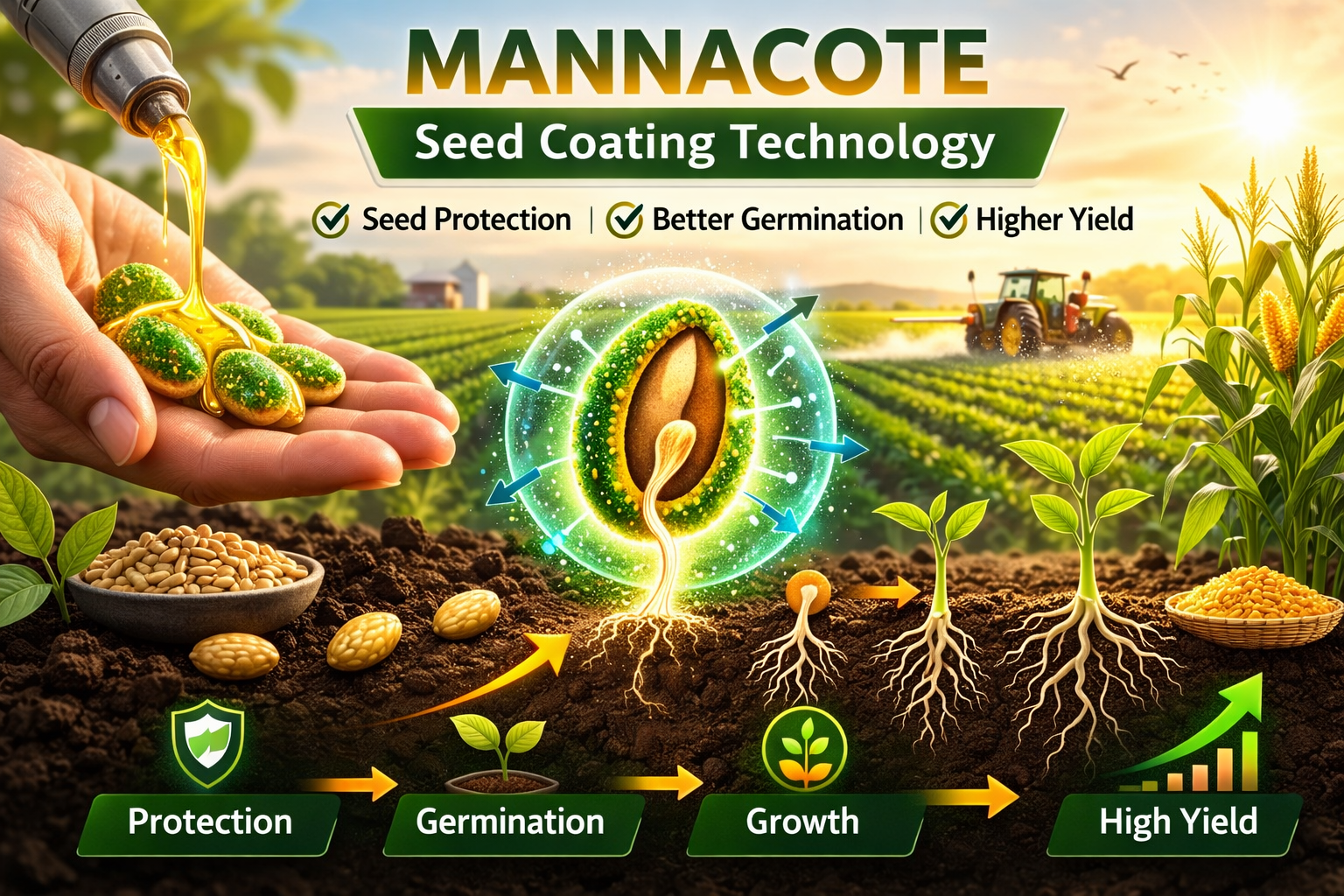
Mannacote works by forming a thin protective layer around seeds or treated materials. This coating can include a combination of ingredients such as protective compounds, nutrients, or biological agents that support growth.
When the coated seed is planted in soil, the coating slowly interacts with moisture and the surrounding environment. This process releases beneficial components that help the seed germinate and establish strong early growth.
The coating also serves as a barrier against harmful factors in the soil.
Some of the main functions of mannacote include:
- Protecting seeds from fungal and bacterial infections
- Improving moisture absorption during germination
- Supporting early root development
- Increasing uniform crop emergence
By ensuring seeds survive the most critical early growth stages, mannacote helps farmers achieve more consistent crop stands.
The Importance of Seed Coating Technologies
Seed coating technologies have evolved significantly over the past few decades. Traditional planting methods relied on untreated seeds, which often resulted in inconsistent germination rates.
Modern solutions like mannacote address these challenges by improving seed resilience.
Seed treatments and coatings provide several key advantages:
- Better protection from soil-borne pathogens
- Improved handling and planting efficiency
- Increased germination success
- More uniform plant growth
For commercial agriculture, even a small improvement in germination rates can significantly increase productivity and profitability.
Benefits of Using Mannacote
The growing popularity of mannacote is largely due to the wide range of benefits it provides.
Improved Seed Protection
One of the most important benefits of mannacote is protection against diseases and pests. Soil contains many microorganisms that can damage seeds before they sprout. A protective coating reduces this risk.
Better Germination Rates
Seeds coated with mannacote often experience more consistent germination because they receive additional protection and sometimes supplemental nutrients.
Stronger Early Growth
Early growth stages are critical for plants. Mannacote can help seedlings establish stronger roots and better resistance to stress factors such as drought or temperature fluctuations.
Increased Agricultural Efficiency
Farmers benefit from improved crop uniformity and higher productivity. When more seeds successfully germinate, fields develop more evenly, making crop management easier.
Practical Applications of Mannacote
Mannacote is used in several sectors, particularly in agriculture and horticulture. Its applications continue to expand as research improves seed treatment technologies.
Crop Farming
The most common application is in large-scale crop production. Seeds for crops such as wheat, corn, soybeans, and vegetables can be treated with coatings like mannacote to improve planting success.
Horticulture and Gardening
Commercial nurseries and home gardeners sometimes use treated seeds to ensure better plant establishment, especially in controlled environments like greenhouses.
Agricultural Research
Scientists and agricultural researchers study coatings like mannacote to improve seed performance and develop more sustainable farming methods.
Mannacote and Sustainable Agriculture
Sustainability has become a major focus in modern farming. Technologies that help farmers grow more food with fewer resources are highly valuable.
Mannacote contributes to sustainability in several ways.
First, improved germination means fewer seeds are wasted. Farmers can achieve better crop stands without increasing seed quantities.
Second, protective coatings may reduce the need for excessive pesticide applications during early growth stages.
Third, better root development can improve nutrient uptake, helping plants grow more efficiently.
Together, these benefits support environmentally responsible farming practices while maintaining productivity.
Real-World Example of Mannacote in Farming
To understand the practical value of mannacote, consider a common scenario in commercial agriculture.
A farmer plants untreated seeds in soil that contains fungal pathogens. Some seeds fail to germinate, and others grow weakly due to early infections. The result is uneven plant distribution and lower yields.
When the same farmer uses seeds treated with a protective coating like mannacote, the situation improves dramatically. The coating shields the seeds from pathogens, supports moisture retention, and helps seedlings establish faster.
The field develops more evenly, leading to healthier plants and better harvest results.
Even a 5–10% improvement in germination rates can make a noticeable difference in crop output.
Key Factors That Influence Mannacote Performance
Although mannacote can provide many benefits, its effectiveness depends on several factors.
Soil Conditions
Soil type, moisture levels, and microbial activity can influence how the coating interacts with the environment.
Seed Quality
High-quality seeds perform better with coatings because they already have strong genetic potential for growth.
Planting Methods
Proper planting depth, spacing, and timing are important for achieving the best results from treated seeds.
Farmers who combine good agricultural practices with technologies like mannacote typically see the greatest improvements.
Future Trends in Seed Coating Technologies
The future of seed treatment technologies looks promising. Innovations continue to improve the performance and environmental sustainability of coatings like mannacote.
Researchers are exploring advanced formulations that include:
- Biological growth stimulants
- Microbial inoculants that support soil health
- Natural compounds that protect plants from stress
As agricultural technology evolves, seed coatings will likely become more precise and environmentally friendly.
These developments may help farmers increase food production while reducing environmental impact.
Common Misconceptions About Mannacote
Despite its benefits, some misconceptions still exist about seed coatings like mannacote.
One common belief is that coatings replace good farming practices. In reality, they are meant to support—not replace—proper agricultural management.
Another misconception is that coatings always guarantee higher yields. While they improve the chances of successful germination, factors like weather, soil fertility, and crop management still play major roles in final production.
Understanding how mannacote works helps farmers use it effectively as part of a broader farming strategy.
Frequently Asked Questions (FAQs)
What is mannacote used for?
Mannacote is typically used as a protective coating or treatment applied to seeds to improve germination, protect against diseases, and support early plant growth.
Is mannacote safe for plants?
Yes, when used correctly, mannacote is designed to support plant health and improve seed performance without harming crops.
Does mannacote increase crop yield?
Mannacote can indirectly increase yield by improving seed survival and early plant development, which leads to more uniform crop growth.
Can gardeners use mannacote-treated seeds?
Yes, treated seeds may be used by gardeners as well as commercial farmers to improve planting success.
How long does mannacote protection last?
The protective effects usually last through the critical early stages of germination and seedling establishment.
Conclusion
Mannacote represents an important advancement in modern agricultural technology. By providing a protective coating that supports germination and early plant development, it helps farmers overcome many of the challenges associated with seed planting.
From improved germination rates to better protection against soil-borne diseases, the benefits of mannacote make it a valuable tool for both commercial agriculture and smaller-scale gardening.
As seed treatment technologies continue to evolve, solutions like mannacote will likely play an even greater role in sustainable food production.
If you are interested in improving crop success, understanding and exploring innovations like mannacote could be an important step toward achieving better agricultural results.

