
Introduction
You click a link. It looks short. It looks simple. But it raises a question: what exactly is adsy.pw/hb5?
Short links like this are everywhere. They appear on social media, messaging apps, blogs, and even in email campaigns. While some are harmless marketing tools, others may redirect you to unknown pages.
In this guide, you will learn what adsy.pw/hb5 likely represents, how shortened URLs work, the potential risks involved, and how to stay safe online. If you value digital security and smart browsing habits, this article will give you clear and practical answers.
What Is adsy.pw/hb5?
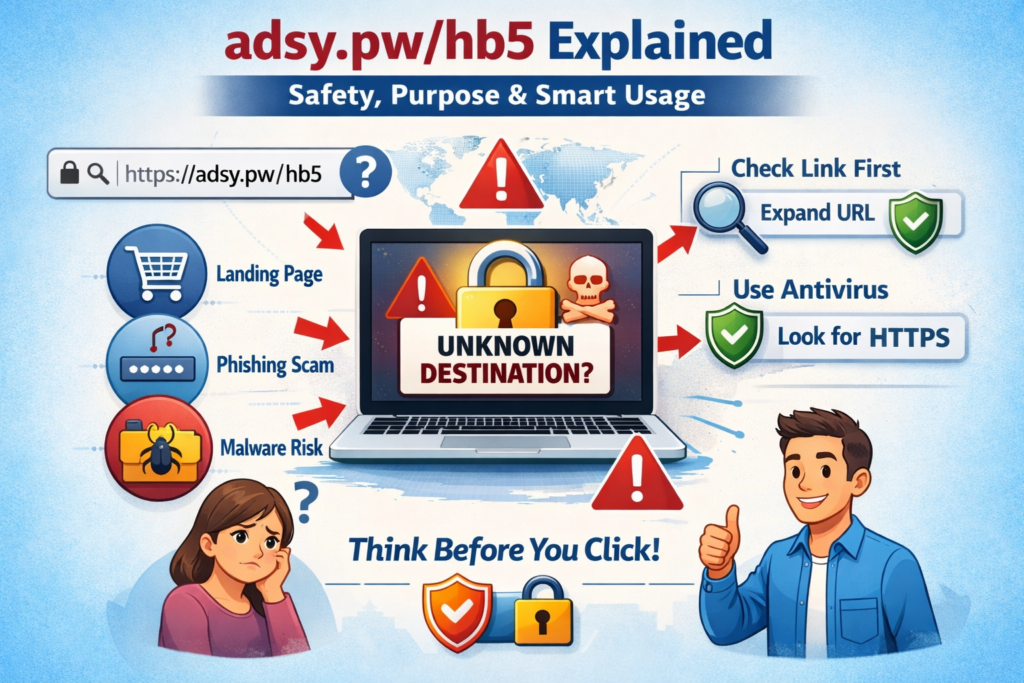
adsy.pw/hb5 appears to be a shortened URL. URL shorteners compress long web addresses into smaller links that are easier to share.
For example, instead of sharing a long tracking link filled with random numbers and characters, marketers use short domains to make the link look clean and clickable.
In most cases, a shortened link redirects users to another website. That destination could be:
- A product landing page
- A promotional offer
- A blog article
- A file download
- An advertisement page
- Or in some cases, a suspicious or unsafe site
The key issue is simple: you cannot see the final destination just by looking at the short link.
Why Are Shortened Links Like adsy.pw/hb5 Used?
Short links are popular for several reasons.
1. Cleaner Appearance
Long URLs look messy. Short links look professional and neat, especially on social media platforms where space is limited.
2. Tracking and Analytics
Marketers use short links to track clicks. They can see:
- How many people clicked
- Which country the clicks came from
- What device was used
- The time of engagement
This data helps businesses improve campaigns and measure results.
3. Monetization
Some short link services generate revenue by showing ads before redirecting users. The user clicks the link, views an advertisement, and then reaches the final page.
4. Affiliate Marketing
Short links are often used in affiliate marketing. Instead of exposing a long affiliate URL, creators use a shortened version to keep it simple.
Is adsy.pw/hb5 Safe?
The real question is not just what it is — but whether it is safe.
The safety of adsy.pw/hb5 depends entirely on its destination. A short link itself is not dangerous. However, it can hide harmful content.
Here are the main risks associated with unknown short URLs:
Hidden Redirects
A link may redirect multiple times before reaching its final page. Some redirects are normal. Others are used to push users toward misleading content.
Phishing Attacks
Cybercriminals use short links to hide phishing pages. These fake pages may ask for:
- Login credentials
- Banking information
- Email passwords
- Personal data
Since the original URL is hidden, users cannot easily verify legitimacy.
Malware Downloads
Some links automatically trigger downloads. These downloads may contain spyware, adware, or malicious software.
Data Tracking
Certain links track user behavior without clear consent. They may collect IP addresses, device data, and browsing patterns.
How to Check a Shortened Link Before Clicking
You do not have to guess. You can take simple steps to protect yourself.
Preview the Link
Some URL shorteners allow previews. Adding specific symbols before the link may show the destination page. However, this depends on the service.
Use an Online Link Expander
There are free tools that reveal the final destination of a short URL without opening it.
Hover Before Clicking
On desktop devices, hovering over a link may show the full URL at the bottom of your browser.
Use Antivirus Protection
A strong antivirus program can block malicious sites before they load.
Check for HTTPS
If the redirected page does not use HTTPS encryption, avoid entering personal information.
Real-World Example: How Short Links Are Used in Marketing
Imagine a small online clothing brand launching a flash sale. Instead of sharing a long product link, they use a short link like adsy.pw/hb5.
They post it on social media with a message:
“50% OFF Today Only. Click Here.”
When users click, they land on the sale page. The business tracks clicks, conversions, and engagement rates.
This is a legitimate use of short links.
However, the same method can be misused. A fake message could say:
“Your account is suspended. Click here to verify.”
That link might lead to a fake login page designed to steal passwords.
The link format looks similar. The intention is completely different.
SEO and Short Links: Do They Affect Rankings?
Shortened URLs generally do not help with SEO rankings directly.
Search engines care about:
- Content quality
- Relevance
- Authority
- User experience
- Page speed
Short links are mostly marketing tools. However, excessive redirects can slow down loading times. Slow pages can affect user experience, which indirectly impacts SEO performance.
If adsy.pw/hb5 redirects multiple times before loading, it may reduce trust and increase bounce rates.
How Businesses Should Use Short Links Responsibly
If you are a marketer or business owner, transparency builds trust.
Follow these principles:
- Clearly explain where the link leads
- Avoid misleading headlines
- Do not force downloads
- Use secure HTTPS landing pages
- Respect user privacy
Users are becoming more aware of digital risks. Clear communication improves credibility and long-term brand trust.
Warning Signs That a Short Link Might Be Risky
Not every short link is dangerous. But these red flags should make you pause:
- Urgent or threatening language
- Promises that sound unrealistic
- Random messages from unknown contacts
- Poor spelling and grammar
- Requests for sensitive data
If something feels suspicious, trust your instincts.
The Psychology Behind Clicking Short Links
Short links create curiosity. They hide information. That mystery triggers clicks.
This tactic is often used in:
- Social media marketing
- Influencer promotions
- SMS campaigns
- Email newsletters
Marketers call this a curiosity gap. It works well. But ethical marketers use it responsibly.
The Future of URL Shortening and Digital Trust
Digital awareness is growing. Users now question unknown links more than ever.
Browser security systems are improving. Email platforms flag suspicious links. Social media algorithms detect harmful redirects faster.
At the same time, legitimate businesses continue using shortened URLs for branding and tracking.
The future will likely bring:
- Stronger link transparency tools
- Better malware detection
- Improved consumer awareness
Short links will remain part of digital marketing — but trust will be the deciding factor.
Frequently Asked Questions (FAQs)
What happens if I click adsy.pw/hb5?
You will likely be redirected to another website. The safety depends on the destination page.
Can a shortened link contain a virus?
The link itself does not contain a virus, but it can redirect to a malicious site that downloads harmful software.
How can I know where a short link goes?
You can use a link expander tool or security scanner to preview the destination safely.
Are short links legal?
Yes, URL shortening is legal and widely used in marketing. Problems arise only when used for scams or fraud.
Should I avoid all short links?
No. Many businesses use them safely. However, avoid clicking links from unknown or suspicious sources.
Conclusion: Should You Trust adsy.pw/hb5?
adsy.pw/hb5 is most likely a shortened URL designed to redirect users. It may be part of a marketing campaign, an advertisement, or an affiliate link. It could also lead somewhere unsafe.
The link itself is not the issue. The destination is what matters.
Stay cautious. Verify before clicking. Use security tools. Never share personal information on unknown pages.
Smart browsing protects your data, your identity, and your peace of mind.
If you found this guide helpful, share it with others who want to stay safe online. Awareness is the strongest defense in today’s digital world.