

Concise Summary Answer
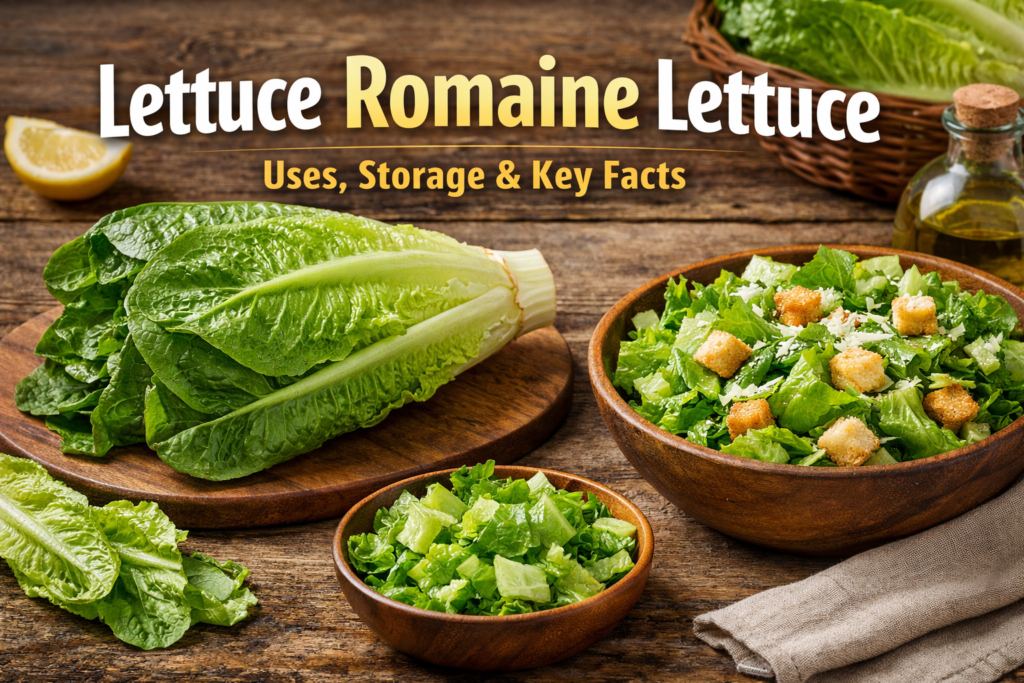
Lettuce romaine lettuce, commonly known as romaine lettuce or cos lettuce, is a crisp, elongated leafy green widely used in salads, wraps, and sandwiches. It is valued for its crunchy texture, mild flavor, versatility in cooking, and reliable shelf life compared to softer lettuce varieties.
What Is Romaine Lettuce?
Romaine lettuce (Lactuca sativa var. longifolia) is a type of leafy vegetable characterized by:
- Long, upright leaves
- Firm central ribs
- Deep green outer leaves with a lighter inner heart
It is one of the most popular lettuce varieties worldwide and is a staple ingredient in many cuisines, especially Mediterranean and Western dishes.
Common Names
- Romaine lettuce
- Cos lettuce
- Tall lettuce
Romaine Lettuce vs Other Lettuce Types
Understanding how romaine compares with other lettuce varieties helps clarify why it’s so widely used.
| Lettuce Type | Texture | Flavor | Best Uses |
|---|---|---|---|
| Romaine lettuce | Crunchy | Mild, slightly bitter | Caesar salads, wraps |
| Iceberg lettuce | Very crunchy | Neutral | Burgers, tacos |
| Butter lettuce | Soft | Slightly sweet | Light salads |
| Leaf lettuce | Tender | Mild | Everyday salads |
Romaine stands out because it balances crunch and flavor, making it suitable for both raw and lightly cooked dishes.
Nutritional Profile of Romaine Lettuce (General Overview)
Romaine lettuce is often appreciated for being:
- Low in calories
- High in water content
- Naturally rich in fiber
It also contains naturally occurring vitamins and minerals commonly found in leafy greens. These characteristics make it a popular choice for people seeking fresh, light, and balanced meals.
Note: This article avoids medical or health claims and focuses on general food characteristics.
Popular Uses of Lettuce Romaine Lettuce
1. Salads
Romaine is best known as the base for Caesar salad, thanks to its sturdy leaves that hold dressing well without wilting.
2. Sandwiches and Wraps
Its crisp structure makes it ideal for:
- Sandwich layering
- Lettuce wraps
- Burgers and shawarmas
3. Grilled or Roasted Romaine
Light grilling or roasting enhances its flavor and texture, making it a popular option in modern cuisine.
4. Chopped and Mixed Dishes
Romaine works well in:
- Grain bowls
- Pasta salads
- Protein bowls
How to Choose Fresh Romaine Lettuce
When buying romaine lettuce, look for:
- Firm, upright heads
- Bright green leaves
- Crisp ribs without browning
- No slimy or wilted areas
Fresh romaine should feel heavy for its size, indicating good moisture content.
How to Store Romaine Lettuce Properly
Correct storage helps extend freshness:
- Remove damaged outer leaves
- Do not wash before storing
- Wrap loosely in paper towel
- Place in a breathable bag
- Store in the refrigerator crisper drawer
When stored properly, romaine lettuce can stay fresh for 7–10 days.
Romaine Lettuce in Global Cuisine
Romaine lettuce is widely used across different regions:
- Mediterranean cuisine – salads and fresh sides
- American cuisine – burgers, wraps, Caesar salads
- Middle Eastern cuisine – shawarma wraps, mezze platters
- European cuisine – grilled lettuce dishes
Its adaptability makes it a global favorite.
Is Romaine Lettuce Safe to Eat Raw?
Romaine lettuce is commonly eaten raw around the world. Like all fresh produce, it should be:
- Washed thoroughly
- Stored correctly
- Used before spoilage
Proper handling ensures quality and freshness.
Environmental and Farming Considerations
Romaine lettuce is typically grown:
- In temperate climates
- Using controlled irrigation
- In both open fields and greenhouse systems
It is harvested multiple times a year, making it a reliable crop for farmers and suppliers.
FAQs About Lettuce Romaine Lettuce
What is the difference between romaine lettuce and iceberg lettuce?
Romaine lettuce has longer leaves, more flavor, and a firmer texture compared to iceberg lettuce.
Can romaine lettuce be cooked?
Yes, romaine lettuce can be lightly grilled, roasted, or sautéed while still maintaining structure.
How long does romaine lettuce last in the fridge?
When stored properly, it typically lasts 7–10 days.
Is romaine lettuce the same as cos lettuce?
Yes, romaine lettuce and cos lettuce refer to the same variety.
Can romaine lettuce be used instead of other lettuce types?
In most recipes, romaine can substitute other lettuces, especially where crunch is desired.
Key Entities & Semantic Keywords Used
- Romaine lettuce
- Cos lettuce
- Leafy greens
- Caesar salad
- Lactuca sativa
- Fresh produce
- Salad greens
Final Thoughts
Lettuce romaine lettuce remains one of the most versatile and widely used leafy vegetables due to its texture, flavor balance, and adaptability across cuisines. Whether used fresh, grilled, or wrapped, it continues to be a reliable choice for both home cooks and professional kitchens.



Pingback: Nerwey Travel Guide 2026: Fjords, Northern Lights & Tips