
Concise Summary Answer
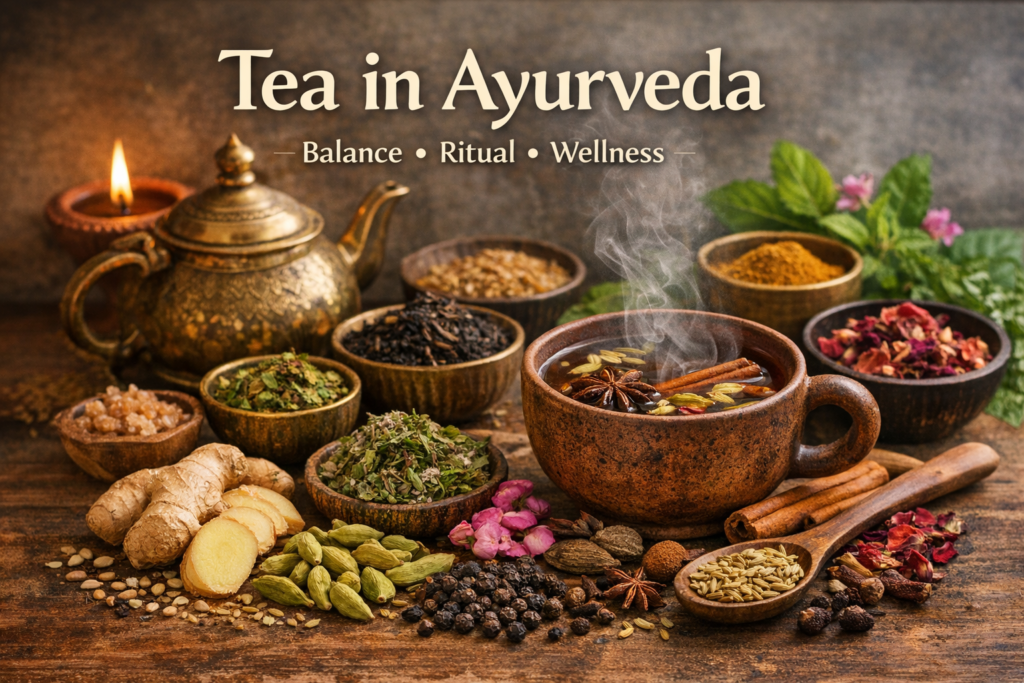
Tea in Ayurveda is viewed not just as a beverage but as a daily ritual that supports balance, mindfulness, and digestion when chosen according to individual body types (Doshas). Ayurvedic teas are traditionally made from herbs, spices, and leaves to complement lifestyle routines and seasonal needs, focusing on general wellness rather than treatment or cure.
Introduction: Understanding Tea Through Ayurveda
Ayurveda, the ancient holistic system originating in India over 5,000 years ago, emphasizes harmony between body, mind, and environment. Within this system, tea is considered a supportive daily habit, often prepared using herbs and spices known for their traditional use in maintaining balance.
Unlike modern therapeutic drinks, Ayurvedic teas are not intended to diagnose, treat, or cure health conditions. Instead, they are part of general self-care routines that encourage awareness, moderation, and seasonal alignment.
The Ayurvedic Philosophy Behind Tea
Ayurveda is built on the concept of three Doshas:
- Vata (air & space)
- Pitta (fire & water)
- Kapha (earth & water)
Tea in Ayurveda is selected based on:
- Climate and season
- Personal constitution (Prakriti)
- Time of day
- Lifestyle habits
This approach makes tea a customizable wellness ritual, not a one-size-fits-all drink.
Common Ingredients Used in Ayurvedic Teas (Entities)
Ayurvedic teas usually contain whole, natural ingredients, many of which are household spices in South Asia:
- Ginger (Zingiber officinale)
- Tulsi (Holy Basil)
- Cinnamon
- Cardamom
- Fennel seeds
- Licorice root
- Cloves
- Black tea leaves (used mindfully)
- Green tea leaves (used sparingly)
These ingredients are traditionally valued for aroma, warmth, and sensory balance, not as medicines.
Tea and the Three Doshas (General Wellness Perspective)
Vata-Balancing Teas
Vata is associated with dryness and movement.
General care approach:
- Warm, mildly spiced teas
- Gentle flavors
- Best enjoyed slowly
Common ingredients: ginger, cinnamon, licorice
Pitta-Balancing Teas
Pitta relates to heat and intensity.
General care approach:
- Cooling or mildly sweet teas
- Avoid overly spicy blends
- Consume in moderation
Common ingredients: fennel, rose petals, coriander
Kapha-Balancing Teas
Kapha reflects heaviness and stability.
General care approach:
- Light, warming teas
- Strong aroma
- Best taken in the morning or early afternoon
Common ingredients: ginger, black pepper, clove
Herbal Tea vs Traditional Tea in Ayurveda
Herbal Teas (Preferred Traditionally)
- Caffeine-free
- Made from roots, leaves, seeds, and spices
- Aligned with Ayurvedic lifestyle routines
Black & Green Tea (Used Mindfully)
- Introduced later in Ayurvedic culture
- Considered stimulating
- Often balanced with spices like cardamom or milk in moderation
Tea as a Daily Ayurvedic Ritual
In Ayurveda, how you drink tea matters as much as what you drink.
General Care Tips:
- Sip slowly rather than gulping
- Avoid very hot or iced extremes
- Drink tea away from heavy meals
- Prepare fresh whenever possible
- Choose seasonal ingredients
Tea is often paired with mindfulness, making it part of daily self-awareness rather than a quick energy fix.
Seasonal Use of Tea in Ayurveda
Summer
- Light, cooling herbal infusions
- Lower spice intensity
Winter
- Warming teas with spices
- Served warm, not boiling
Monsoon
- Simple, lightly spiced teas
- Focus on freshness and hygiene
Cultural and Historical Significance
Tea in Ayurveda predates modern tea culture. Ancient texts such as:
- Charaka Samhita
- Sushruta Samhita
mention herbal infusions prepared for daily balance and seasonal adaptation, not for clinical purposes.
Over time, chai evolved as a cultural blend influenced by Ayurvedic spice wisdom.
Safety & Responsible Use (Important Note)
- Ayurvedic teas are not medical treatments
- Avoid excessive consumption
- Pregnant or sensitive individuals should choose mild blends
- Always consult a qualified professional for health concerns
This article focuses only on general wellness and lifestyle care.
People Also Ask (Common Questions)
Is tea allowed in Ayurveda?
Yes, tea is generally accepted when used mindfully and aligned with personal balance and routine.
Which tea is best according to Ayurveda?
Ayurveda does not recommend a single “best” tea. Choices depend on individual constitution, season, and lifestyle.
Can I drink tea every day in Ayurveda?
Moderate daily consumption is traditionally acceptable, especially herbal teas prepared fresh.
Is Ayurvedic tea caffeine-free?
Most Ayurvedic herbal teas are caffeine-free. Traditional black or green tea may contain caffeine.
What is Ayurvedic chai?
Ayurvedic chai is a spiced tea blend using ingredients like ginger, cardamom, and cinnamon, prepared for warmth and balance.
FAQs
Q: Can Ayurvedic tea replace regular tea?
A: Many people choose herbal Ayurvedic teas as a gentler daily alternative, depending on preference.
Q: Is Ayurvedic tea safe for everyone?
A: Mild herbal blends are generally used for general wellness, but individual sensitivity varies.
Q: Does Ayurveda recommend sugar in tea?
A: Ayurveda traditionally favors natural sweetness in moderation, depending on the individual.
Final Thoughts
Tea in Ayurveda is less about ingredients alone and more about intention, awareness, and balance. Whether herbal or lightly spiced, Ayurvedic tea serves as a comforting daily ritual that aligns with seasonal rhythms and mindful living.
When enjoyed thoughtfully, tea becomes more than a drink—it becomes a moment of pause in a fast-moving world. 🍃☕