



Introduction
In a digital world full of new terms and evolving concepts, dihward is quickly gaining attention. Whether you’ve come across it in business, technology, or online discussions, understanding dihwerd can give you a clear advantage. But what exactly is it, and why does it matter?
This guide breaks down dihward in simple, practical terms. You’ll learn how it works, where it’s used, and how you can apply it effectively in real life. No fluff—just clear, helpful insights you can actually use.
What Is Dihward?
Dihward is a modern concept that refers to a structured approach to managing processes, ideas, or systems in a more efficient and adaptive way. It focuses on combining flexibility with organization, allowing individuals and businesses to improve outcomes without adding complexity.
At its core, dihwerd is about working smarter, not harder. It blends strategy, optimization, and adaptability into one framework. This makes it especially useful in fast-changing environments where traditional methods fall short.
Unlike rigid systems, dihward evolves based on needs. It encourages continuous improvement rather than fixed rules.
Why Dihward Is Gaining Popularity
The rise of dihwerd is not random. It reflects a shift in how people approach productivity and problem-solving today.
Modern challenges require flexible solutions. Businesses face constant changes, and individuals need systems that adapt quickly. Dihward fits perfectly into this environment because it promotes:
- Simplicity over complexity
- Efficiency over effort
- Adaptability over rigidity
As more people realize the limits of traditional systems, dihward becomes a practical alternative.
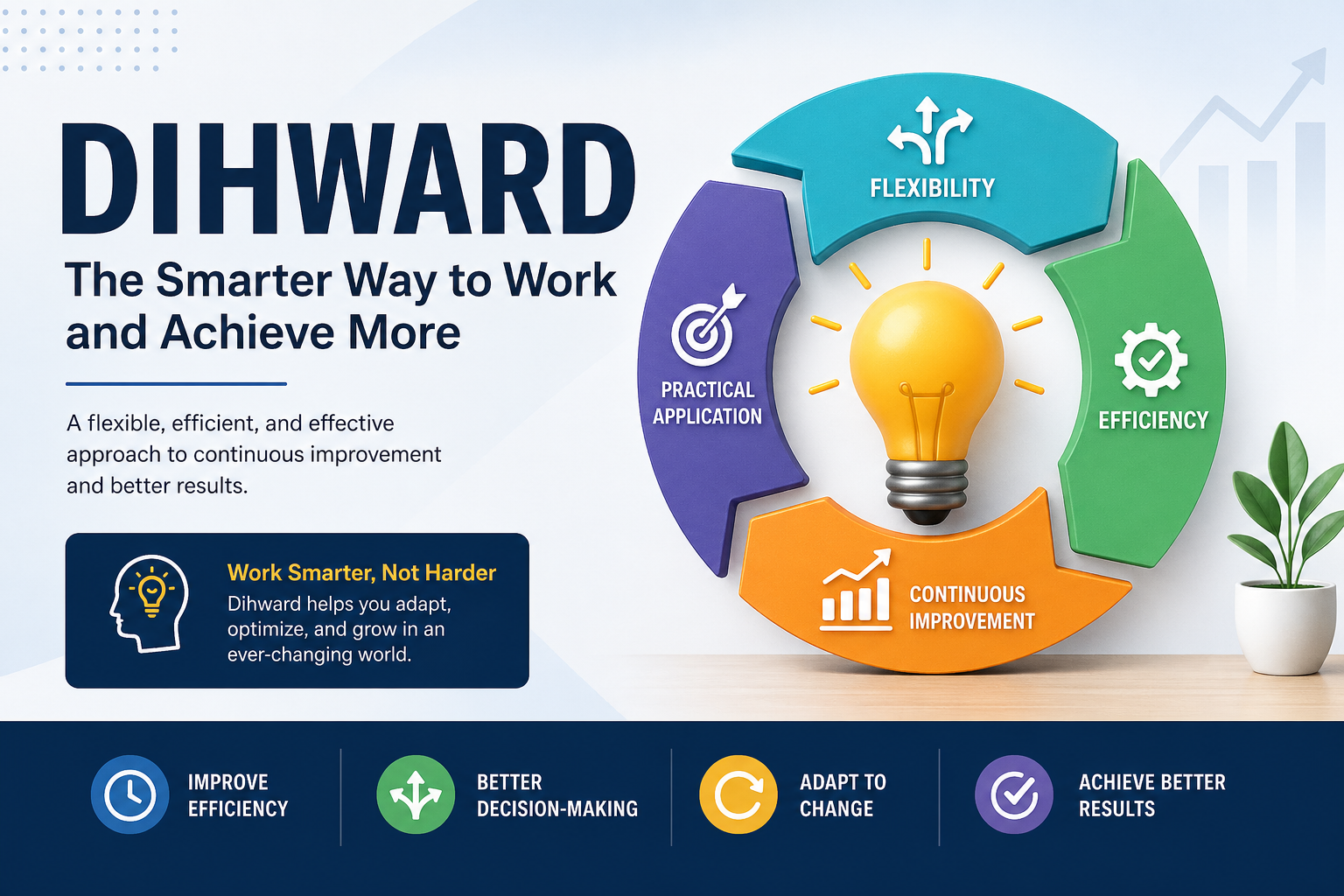
Key Principles of Dihward
To fully understand dihward, it helps to break it down into its core principles.
1. Flexibility First
Dihward allows you to adjust your approach based on changing conditions. Instead of following a fixed plan, you refine your strategy as you go.
2. Efficiency Optimization
The focus is always on reducing waste—whether it’s time, effort, or resources. Every step is designed to deliver maximum value.
3. Continuous Improvement
Dihwerd is not a one-time setup. It evolves through regular evaluation and improvement.
4. Practical Application
Theory alone is not enough. Dihwerd emphasizes real-world use, ensuring that ideas actually work in practice.
How Dihward Works in Real Life
Understanding theory is helpful, but real value comes from application. Let’s look at how dihward works in everyday situations.
Business Example
A small business owner struggling with workflow inefficiencies adopts dihwerd principles. Instead of overhauling everything at once, they start small:
They identify bottlenecks, simplify processes, and test new approaches step by step. Over time, productivity improves without major disruptions.
Personal Productivity Example
An individual feeling overwhelmed with daily tasks uses dihwerd to organize their routine. They focus on high-impact activities and remove unnecessary steps.
The result is a more manageable schedule and better results with less stress.
Benefits of Using Dihward
Dihward offers several clear advantages that make it appealing across different fields.
Improved Efficiency
By focusing only on what truly matters, dihwerd eliminates wasted effort. This leads to faster and better outcomes.
Better Decision-Making
Since dihwerd encourages ongoing evaluation, decisions are based on real data and experience rather than assumptions.
Adaptability
One of the biggest strengths of dihward is its ability to adapt. Whether conditions change suddenly or gradually, the system remains effective.
Reduced Complexity
Instead of adding layers of processes, dihwerd simplifies them. This makes it easier to manage and scale.
Common Mistakes to Avoid
While dihward is powerful, it’s not immune to misuse. Many people fail to get results because they approach it incorrectly.
One common mistake is trying to apply dihwerd too quickly. Since it relies on gradual improvement, rushing the process can lead to confusion.
Another issue is ignoring feedback. Dihwerd depends on learning from results. Without this, the system cannot evolve.
Lastly, some people overcomplicate dihwerd itself. Ironically, this defeats its purpose. The goal is simplicity, not complexity.
Practical Tips for Implementing Dihward
If you want to apply dihward effectively, start with a clear and simple approach.
Begin by identifying one area that needs improvement. It could be your workflow, daily routine, or business process. Focus on small changes rather than large transformations.
Pay attention to results. What works? What doesn’t? Use this information to refine your approach.
Stay consistent. Dihwerd is not about quick wins but long-term progress. Small improvements add up over time.
Dihward in Different Industries
Dihward is not limited to one field. Its flexibility allows it to be used across various industries.
Technology
In tech, dihwerd helps streamline development processes and improve efficiency without sacrificing quality.
Marketing
Marketers use dihward to test strategies, analyze results, and optimize campaigns continuously.
Education
Educators apply dihwerd to improve teaching methods and adapt to different learning styles.
Healthcare
In healthcare, dihward supports better resource management and patient care by focusing on efficiency and adaptability.
The Future of Dihward
As the world continues to change, the need for adaptable systems will only grow. Dihwerd is well-positioned to become a key approach in both personal and professional environments.
Its emphasis on flexibility and continuous improvement aligns perfectly with modern demands. As more people adopt it, we can expect further innovation and refinement.
Conclusion
Dihwerd is more than just a trend. It’s a practical approach to solving real problems in a fast-changing world. By focusing on efficiency, adaptability, and continuous improvement, it offers a smarter way to work and live.
If you want better results without unnecessary complexity, dihwerd is worth exploring. Start small, stay consistent, and let the process evolve.
Now it’s your turn. Apply dihwerd to one area of your life today and see the difference it can make.
FAQs
What does dihward mean?
Dihwerd refers to a flexible and efficient approach to managing processes and improving outcomes through continuous adaptation.
Is dihwerd suitable for beginners?
Yes, dihwerd is simple to start. It focuses on small, practical changes rather than complex systems.
Can dihwerd be used in business?
Absolutely. Many businesses use dihwerd to improve workflows, increase efficiency, and adapt to change.
How long does it take to see results?
Results vary, but small improvements can often be seen quickly. Long-term success comes from consistent application.
Is dihwerd better than traditional methods?
It depends on the situation. Dihwerd works best in dynamic environments where flexibility and efficiency are important.

