



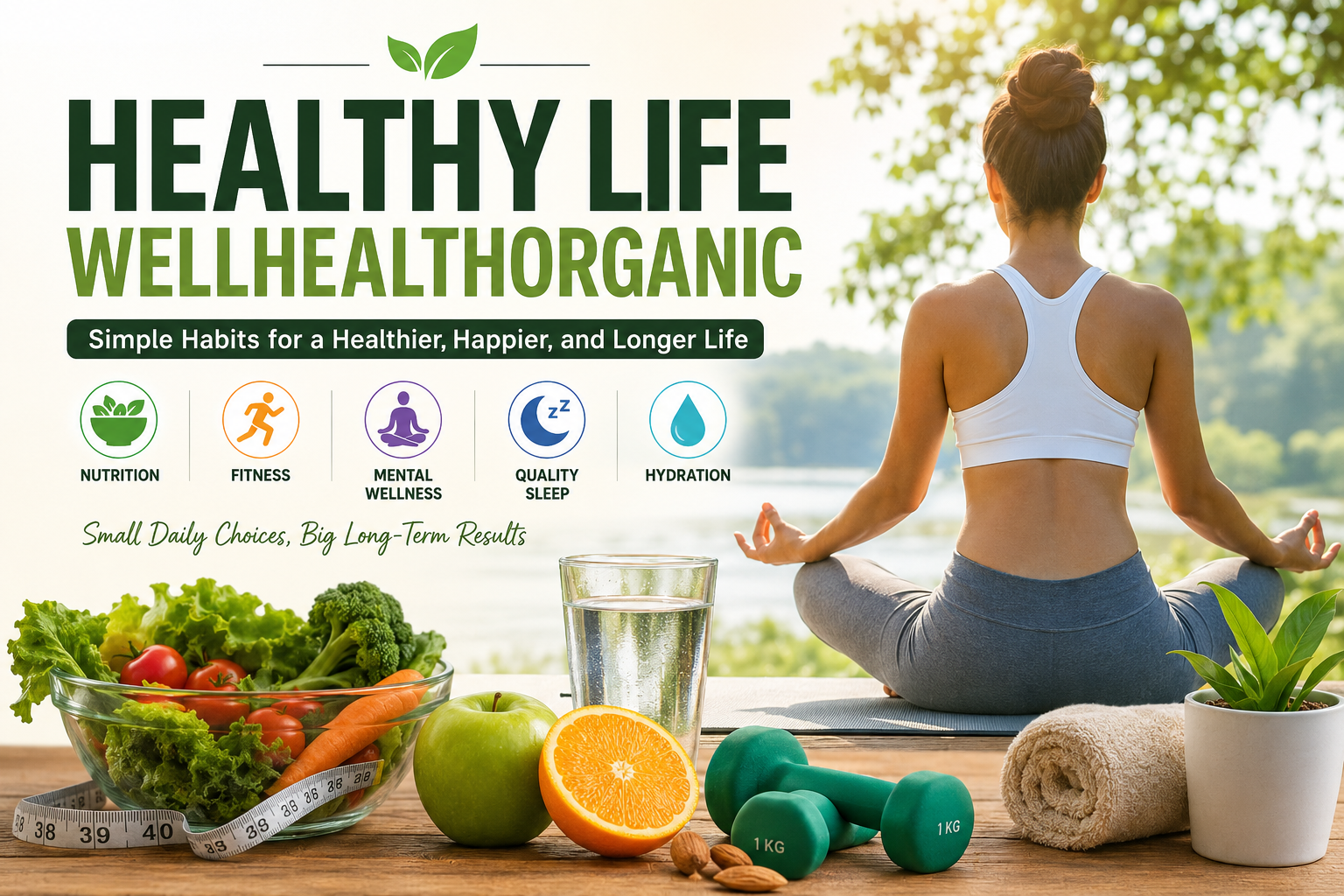
A healthy life does not require extreme diets, expensive products, or hours in the gym. It starts with simple choices that you can repeat every day. Eating balanced meals, moving your body, sleeping well, caring for your skin and teeth, and managing stress can make a real difference over time.
The idea behind healthy life WellHealthOrganic is easy to understand: focus on natural, practical, and sustainable habits instead of quick fixes. Whether you want better fitness, healthier skin, improved digestion, or more energy, small daily improvements can help you build a healthier lifestyle.
What Does a Healthy Life Mean?
A healthy life means taking care of your physical and mental well-being together. Good health is not only about avoiding illness. It is also about having enough energy for daily activities, getting quality sleep, eating nutritious food, staying active, and maintaining healthy relationships.
The World Health Organization recommends that adults get at least 150 minutes of moderate physical activity each week, along with muscle-strengthening activities on two or more days. This does not mean you need a complicated workout routine. Brisk walking, cycling, swimming, household activities, and simple strength exercises can all contribute to an active lifestyle.
For example, a person who walks for 30 minutes five days a week already reaches the basic weekly aerobic activity target. Adding a few simple strength exercises can make the routine even more complete.
Healthy Life WellHealthOrganic: Start With Better Nutrition
Food provides the energy and nutrients your body needs to function. A healthy diet does not have to be boring. The goal is to create balance and variety.
Try to build meals around vegetables, fruits, whole grains, beans, lentils, nuts, seeds, and suitable protein sources. Choose less processed food when possible and limit excessive added sugar, salt, and unhealthy fats.
A simple lunch could include brown rice or whole-grain roti, vegetables, lentils, yogurt, and a source of protein. This type of meal can provide carbohydrates for energy, protein for tissue repair, fiber for digestion, and important vitamins and minerals.
Hydration also matters. Water is usually the best everyday drink. Your needs can change depending on weather, physical activity, age, and other factors.
Make Healthy Eating Easier
Healthy eating becomes easier when you make good choices convenient. Keep fruit available for snacks, prepare some vegetables in advance, and plan meals before you become very hungry.
You do not need to completely remove your favorite foods. A sustainable diet allows occasional treats while keeping nutritious foods at the center of your meals.
WellHealthOrganic Fitness for Everyday Strength
Fitness is not only about losing weight or building visible muscles. Regular movement supports cardiovascular health, muscle strength, bone health, balance, and overall well-being.
A beginner can start with walking, stretching, bodyweight squats, wall push-ups, or light resistance exercises. The key is consistency.
If you spend most of your day sitting, try adding short movement breaks. A five-minute walk between work sessions may seem small, but several short periods of movement can add up during the day.
Build a Routine You Can Maintain
The best workout is one you can continue. If you dislike running, you do not have to run. Try walking, cycling, swimming, dancing, sports, or home workouts instead.
Start slowly and increase your activity as your fitness improves. If you have an existing medical condition or are unsure about starting exercise, professional medical advice can help you choose a safe approach.
WellHealthOrganic Healthy Life and Better Sleep
Sleep is often ignored when people think about wellness. Yet quality sleep supports memory, mood, immune function, and physical recovery.
Most adults need around seven or more hours of sleep each night. However, sleep quality matters as well as quantity.
A consistent bedtime can help your body maintain a regular sleep rhythm. Keeping the bedroom comfortable, reducing bright screens before bed, and avoiding large meals close to bedtime may also support better sleep.
For example, someone who normally sleeps at 1 a.m. and wakes at 7 a.m. may benefit from gradually moving bedtime earlier rather than making a sudden change.
Well Health Tips in Hindi WellHealthOrganic
For readers looking for well health tips in Hindi WellHealthOrganic, the basic principles remain simple. अच्छा स्वास्थ्य पाने के लिए संतुलित भोजन, नियमित व्यायाम, पर्याप्त नींद और तनाव को नियंत्रित करना जरूरी है।
रोज़ पर्याप्त पानी पीना, ताज़ी सब्जियां और फल खाना, लंबे समय तक बैठे रहने से बचना और नियमित रूप से चलना आसान लेकिन प्रभावी आदतें हैं।
Healthy habits do not need to be complicated. The most useful approach is to choose changes that fit your daily routine and continue them consistently.
WellHealthOrganic Organic Skincare for Healthy Skin
Skin care starts with basic habits rather than a long list of products. Gentle cleansing, adequate hydration, sun protection, and a balanced diet can support normal skin health.
The phrase wellhealthorganic organic skincare often attracts people who prefer natural ingredients. Natural does not automatically mean safer or more effective, though. Some plant-based ingredients can irritate sensitive skin or cause allergic reactions.
Before applying a new product widely, test it on a small area according to appropriate product guidance. Avoid using harsh ingredients simply because they are marketed as natural.
Skin Care in Hindi WellHealthOrganic
People searching for skin care in Hindi WellHealthOrganic often want simple home-based approaches. A basic routine can include gentle cleansing, moisturizer, and broad-spectrum sunscreen during daytime.
Sun protection is especially important because repeated ultraviolet exposure contributes to premature skin aging and increases skin cancer risk. A sunscreen with SPF 30 or higher is commonly recommended for everyday protection.
Home remedies should be approached carefully. Lemon juice, undiluted essential oils, baking soda, and other harsh kitchen ingredients can irritate the skin. A simple routine is often better than an aggressive one.
Well Health Organic Ayurveda and Traditional Wellness
Ayurveda is a traditional system of health practices with a long history in South Asia. Some people use Ayurvedic approaches as part of their wellness routine.
However, traditional does not mean that every remedy is automatically proven or risk-free. Herbal products can interact with medicines, and product quality can vary.
If you are considering an herbal supplement or Ayurvedic treatment for a health condition, discuss it with a qualified healthcare professional. This is particularly important for children, pregnant people, older adults, and anyone taking prescription medicines.
WellHealthOrganic Dental Care
Oral health is an important part of a healthy life. Poor oral hygiene can contribute to tooth decay, gum disease, pain, and tooth loss.
Brush your teeth twice daily with fluoride toothpaste and clean between your teeth regularly. Regular dental checkups can also help identify problems before they become more serious.
A simple example is a person who brushes only when they remember. Creating a fixed morning and evening routine makes the habit easier to maintain.
Reducing frequent sugary snacks and drinks can also help protect teeth. Water is a better everyday choice than sugar-sweetened beverages.
Stress Management for a Healthy Life
Mental well-being is part of overall health. Everyday stress can come from work, studies, finances, relationships, or responsibilities.
You cannot always remove the source of stress, but you can improve how you respond to it. Walking outdoors, breathing exercises, hobbies, social connection, journaling, prayer or meditation, and adequate sleep may help some people manage everyday stress.
If stress becomes overwhelming or begins affecting daily life, speaking with a qualified mental health professional is a sensible step.
Healthy Life Products: What Should You Choose?
The market is full of healthy life products, from supplements and organic foods to fitness equipment and skincare products. More products do not necessarily mean better health.
Before buying something, consider what problem it is supposed to solve. Check the ingredients, instructions, evidence behind health claims, and reputation of the manufacturer.
Be especially careful with products that promise rapid weight loss, instant detoxification, guaranteed disease cures, or dramatic health results. Strong health claims should be supported by credible scientific evidence.
How to Build a Healthy Daily Routine
A practical wellness routine can begin with a few basic actions. Wake up at a consistent time, drink water, eat a nutritious breakfast if it suits your needs, and include some movement during the day.
At lunch and dinner, aim for balanced portions rather than relying heavily on highly processed foods. Take short movement breaks if you work at a desk. In the evening, reduce unnecessary screen time and prepare your body for sleep.
The goal is not perfection. If you miss a workout or eat an unhealthy meal, simply return to your normal routine at the next opportunity.
Real-Life Example of a Sustainable Healthy Lifestyle
Imagine someone who spends eight hours a day at a desk and rarely exercises. Starting with an intense two-hour workout every day may be difficult to maintain.
Instead, they could begin with a 20-minute daily walk, add two short strength sessions each week, replace some sugary drinks with water, add vegetables to meals, and establish a consistent sleep schedule.
After several weeks, these habits can become normal parts of the day. The person can then increase activity gradually.
This approach shows why consistency often matters more than extreme changes. A small habit repeated for months can have a greater practical effect than an ambitious routine abandoned after one week.
Frequently Asked Questions
What is a healthy life according to WellHealthOrganic?
A healthy life focuses on balanced nutrition, regular physical activity, sufficient sleep, good hygiene, skin and dental care, stress management, and sustainable daily habits.
What are the best well health tips in Hindi WellHealthOrganic?
Basic tips include eating a balanced diet, drinking enough water, staying physically active, sleeping well, maintaining personal hygiene, protecting your skin from excessive sun exposure, and avoiding tobacco.
Is WellHealthOrganic organic skincare safe?
Organic or natural skincare is not automatically safe for everyone. Ingredients can cause irritation or allergies. Check the product ingredients and test new products carefully.
What are simple WellHealthOrganic fitness exercises?
Walking, cycling, swimming, bodyweight squats, wall push-ups, stretching, and basic resistance exercises are accessible options for many beginners.
Are WellHealthOrganic home remedies effective?
Some home practices may provide comfort or support general wellness, but evidence varies widely. Home remedies should not replace appropriate medical treatment for serious symptoms or diseases.
How can I start a healthy life today?
Start with a few manageable changes. Walk regularly, improve the quality of your meals, drink more water, maintain a consistent sleep schedule, and build simple hygiene and self-care habits.
Conclusion
A healthy life WellHealthOrganic approach is ultimately about making sensible choices that you can maintain. You do not need a perfect diet, expensive supplements, or an extreme fitness plan. Better health can begin with ordinary actions repeated every day.
Focus on nutritious food, regular movement, quality sleep, dental hygiene, sensible skincare, stress management, and informed health decisions. Avoid quick-fix promises and choose evidence-based practices whenever possible.
Start with one change today. Make it simple, repeat it consistently, and build from there. Your healthiest lifestyle is not the one that looks perfect for a week; it is the one you can realistically maintain for years.

