



Introduction
Innovation often begins with concepts that remain unfamiliar to the wider public until their value becomes impossible to ignore. Tribupneu is one of those emerging terms attracting increasing attention for its practical applications, efficiency potential, and relevance in modern systems. Whether discussed in technical circles, industrial environments, or performance-driven sectors, tribupneu is becoming a topic worth understanding.
As industries continue to prioritize precision, durability, and operational improvements, tribupneu is entering conversations about smarter systems and sustainable performance. From reducing mechanical strain to improving functional outcomes, its importance is steadily rising.
This guide explores tribupneu in depth, including what it means, how it works, where it is used, and why professionals are paying closer attention to it.
What Is Tribupneu?
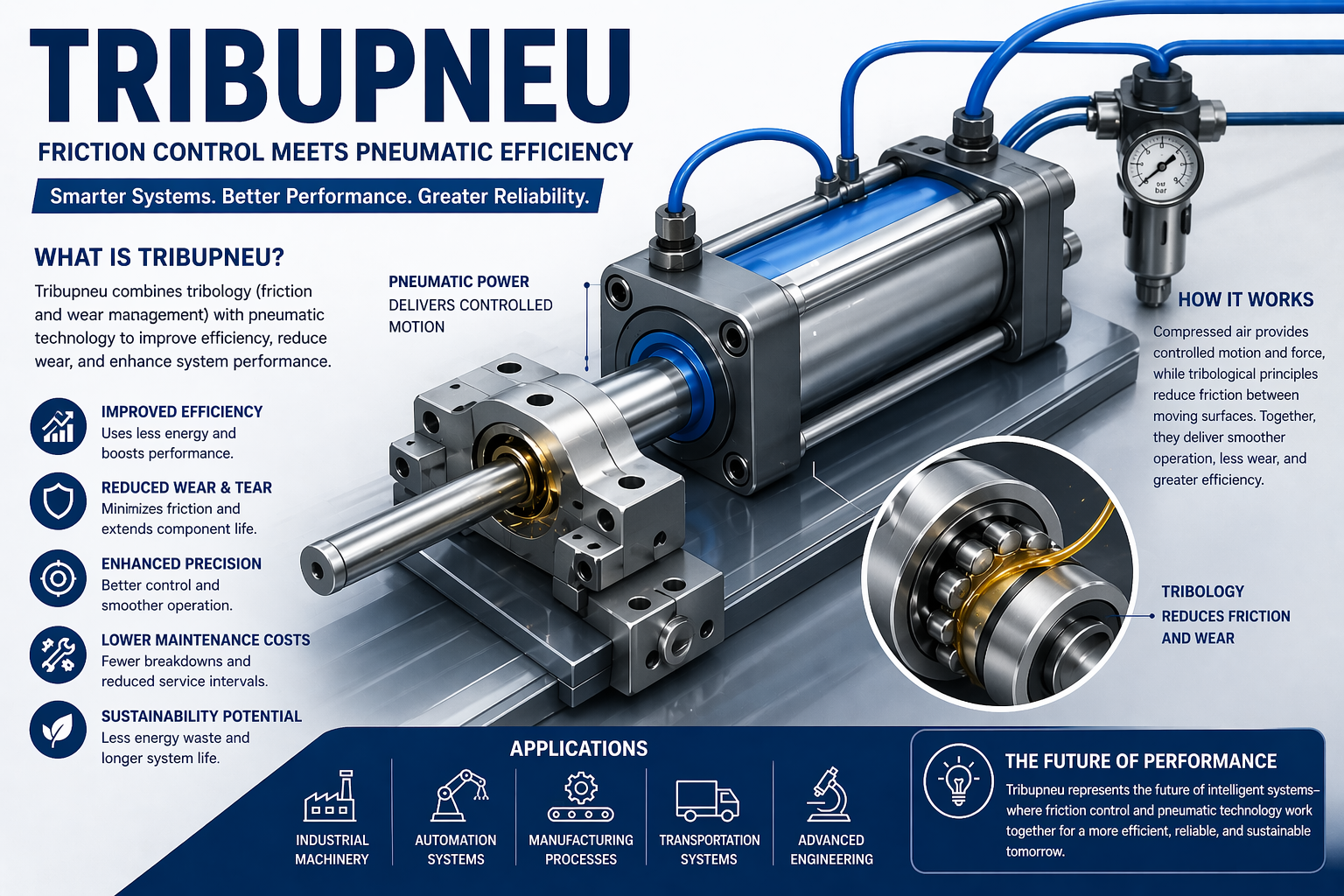
Tribupneu combines principles commonly associated with tribology and pneumatic functionality. In simple terms, it relates to systems or methods where friction control and air-powered mechanisms interact to improve performance.
Tribology focuses on wear, lubrication, and the interaction between moving surfaces. Pneumatic systems rely on compressed air to generate motion or force. When these ideas merge, tribupneu represents an approach designed to enhance efficiency while reducing friction-related losses.
This integration can contribute to better mechanical reliability, smoother operation, and reduced maintenance demands. In many cases, tribupneu solutions are explored to optimize performance where traditional systems face limitations.
Although still gaining recognition, the concept is increasingly linked with engineering advancements and intelligent design strategies.
How Tribupneu Works
Understanding tribupneu starts with understanding the balance it creates.
Mechanical systems often struggle with three common challenges:
Friction causes wear over time.
Energy loss reduces efficiency.
Repeated stress increases maintenance costs.
Tribupneu approaches these issues by combining controlled air pressure systems with friction management techniques.
Compressed air may assist motion, regulate pressure, or support system responsiveness, while tribological principles help reduce resistance between components. Together, these factors create a more balanced and efficient process.
For example, a machine component exposed to repeated movement may benefit from both optimized lubrication behavior and pneumatic support. Instead of relying only on traditional mechanical contact, the system may experience less wear and smoother operation.
That is where tribupneu delivers value.
Why Tribupneu Is Gaining Attention
Interest in tribupneu is growing because modern systems demand more from less.
Businesses want:
Higher efficiency
Lower downtime
Reduced operating costs
Longer equipment lifespan
Improved precision
Tribupneu aligns with these goals.
As industrial technologies become smarter and more connected, hybrid approaches like tribupneu attract attention because they do not simply solve one problem. They improve multiple performance factors at once.
This broader value proposition is a major reason the concept continues gaining relevance.
Key Benefits of Tribupneu
Improved Efficiency
One of the strongest advantages associated with tribupneu is operational efficiency.
When friction losses decrease and pneumatic support improves movement control, systems often use less energy while delivering consistent output.
Even small improvements in efficiency can create substantial long-term savings.
Reduced Wear and Tear
Wear is one of the biggest causes of performance decline in mechanical environments.
By managing friction more effectively, tribupneu can help reduce component degradation. This often means fewer replacements and lower maintenance frequency.
That benefit alone can influence adoption.
Enhanced Precision
Applications requiring controlled motion can benefit from pneumatic responsiveness combined with friction optimization.
This may support smoother transitions, better positioning accuracy, and improved repeatability.
Precision matters in manufacturing, automation, and many advanced processes.
Lower Maintenance Costs
Maintenance is expensive not only because of repair costs but because of downtime.
A system designed with tribupneu principles may reduce service intervals and unexpected failures.
For organizations focused on productivity, this can be a major advantage.
Sustainability Potential
Efficiency improvements often support sustainability.
Reduced energy waste, fewer worn parts, and longer system life may contribute to lower environmental impact.
That makes tribupneu relevant in conversations around greener technologies.
Applications of Tribupneu
Industrial Machinery
Industrial environments often involve continuous motion, pressure systems, and high wear conditions.
These conditions make tribupneu particularly relevant.
Machinery may benefit from friction reduction methods combined with pneumatic support for smoother operation and improved durability.
This can be valuable in production systems where performance consistency is critical.
Automation Systems
Automation relies heavily on controlled movement.
Tribupneu concepts may improve actuator performance, support better motion control, and reduce stress on moving parts.
As automation expands, demand for optimized systems continues growing.
Manufacturing Processes
Manufacturing often depends on speed, accuracy, and reliability.
Even minor mechanical inefficiencies can affect quality or output.
Tribupneu may help improve process performance while reducing operational disruptions.
That is why manufacturers increasingly explore solutions in this area.
Transportation and Mechanical Systems
Vehicles and transport-related systems face constant wear challenges.
Where friction management and pneumatic control intersect, tribupneu concepts may support improved performance and reliability.
This area continues generating interest.
Advanced Engineering Research
Research environments often test emerging performance models.
Tribupneu is gaining traction in innovation-focused discussions because it offers a framework for combining multiple performance strategies rather than treating them separately.
That makes it relevant beyond conventional applications.
Real-World Example of Tribupneu Value
Consider a production facility operating machinery 24 hours a day.
Frequent wear causes shutdowns every few weeks. Maintenance costs rise. Output suffers.
Engineers introduce a tribupneu-based optimization approach.
The system reduces friction at critical contact points while improving pneumatic support for moving components.
Results over time may include:
Less unplanned downtime
Reduced component replacements
Improved operational stability
Higher productivity
Lower energy losses
This example shows why the concept is attracting attention.
Its value is practical, not merely theoretical.
Challenges and Considerations
Like any emerging approach, tribupneu also involves considerations.
Implementation may require technical expertise.
Existing systems may need adaptation.
Initial investment may be necessary.
Performance gains may vary by application.
These factors do not remove its value, but they do highlight the importance of proper analysis before adoption.
Success depends on using tribupneu where it fits operational goals.
How Tribupneu Supports Innovation
Innovation rarely comes from isolated improvements.
It often comes from combining proven ideas in smarter ways.
That is exactly where tribupneu stands out.
Instead of addressing friction and pneumatic performance as separate concerns, it approaches them as interconnected factors.
This integrated perspective can unlock opportunities for:
Smarter design
Better reliability
Longer service life
Higher performance standards
As engineering continues evolving, integrated solutions often outperform isolated fixes.
That is a strong reason tribupneu remains relevant.
Tribupneu and Future Trends
Future trends suggest increasing interest in systems that deliver efficiency, precision, and sustainability together.
Tribupneu fits those priorities.
Several developments may support growth:
Advanced materials can improve friction behavior.
Smart monitoring can optimize pneumatic performance.
Predictive maintenance can support reliability.
Automation growth increases demand for efficient systems.
Sustainability pressures encourage lower waste solutions.
These trends create a favorable environment for tribupneu development.
What appears niche today may become mainstream tomorrow.
Common Misconceptions About Tribupneu
It Is Only for Large Industries
Not true.
While industrial use is significant, tribupneu principles can apply in smaller-scale systems too.
The concept is broader than large factories.
It Is Only About Pneumatics
Also incorrect.
Pneumatic elements matter, but friction management is equally central.
The value comes from integration.
It Is Too Complex to Be Practical
Some assume emerging concepts remain theoretical.
Yet practical applications are often exactly what drive wider adoption.
Tribupneu is attracting attention because of real-world performance potential.
How to Evaluate Tribupneu for Your Needs
If considering tribupneu-related solutions, start by assessing:
Current system inefficiencies
Maintenance challenges
Energy losses
Precision requirements
Long-term cost concerns
Then evaluate whether integrating friction optimization and pneumatic support could improve outcomes.
The best decisions begin with clear operational goals.
Expert Insights on Tribupneu Adoption
Industry experts often emphasize one consistent principle.
Performance gains do not come only from bigger systems.
They come from smarter systems.
Tribupneu aligns with that mindset.
Its growing relevance reflects broader shifts toward efficiency-driven engineering and integrated design.
Organizations that explore these strategies early may gain competitive advantages.
That is often how innovation adoption begins.
Is Tribupneu Worth Attention?
For many professionals, yes.
Even if the term is still emerging, the principles behind it connect directly to established performance priorities.
Efficiency.
Reliability.
Durability.
Precision.
Cost control.
These are not trends. They are permanent operational concerns.
That is why tribupneu deserves attention.
Conclusion
Tribupneu represents more than a technical buzzword. It reflects a practical approach to improving system performance by combining friction management and pneumatic functionality in smarter ways.
Its benefits can include greater efficiency, reduced wear, improved precision, lower maintenance costs, and potential sustainability gains. From industrial machinery to automation and advanced engineering, its relevance continues expanding.
As performance expectations rise across industries, integrated solutions like tribupneu are likely to become increasingly important.
If you are exploring smarter mechanical strategies, operational improvements, or future-ready technologies, now is the right time to understand tribupneu and evaluate where it may fit into your long-term plans.
FAQs
What does tribupneu mean?
Tribupneu generally refers to approaches that combine tribology principles involving friction and wear management with pneumatic systems to improve performance and efficiency.
What is tribupneu used for?
Tribupneu may be used in industrial systems, automation, manufacturing processes, and other applications where friction reduction and pneumatic support can improve outcomes.
What are the benefits of tribupneu?
Potential benefits include improved efficiency, reduced wear, better precision, lower maintenance costs, and enhanced reliability.
Is tribupneu only used in engineering?
Engineering is a major focus, but its principles may apply across various performance-driven environments.
Why is tribupneu becoming popular?
Growing interest comes from rising demand for smarter, more efficient, and sustainable systems that can deliver multiple performance benefits at once.
Can tribupneu reduce maintenance costs?
In many applications, reducing friction-related wear and improving operational balance may contribute to lower maintenance demands over time.

