



Introduction
In negotiations, many buyers focus only on the numbers. They think the highest bid, fastest response, or strongest financing wins. But experienced negotiators know something deeper often influences the outcome: how the offer reaches the seller.
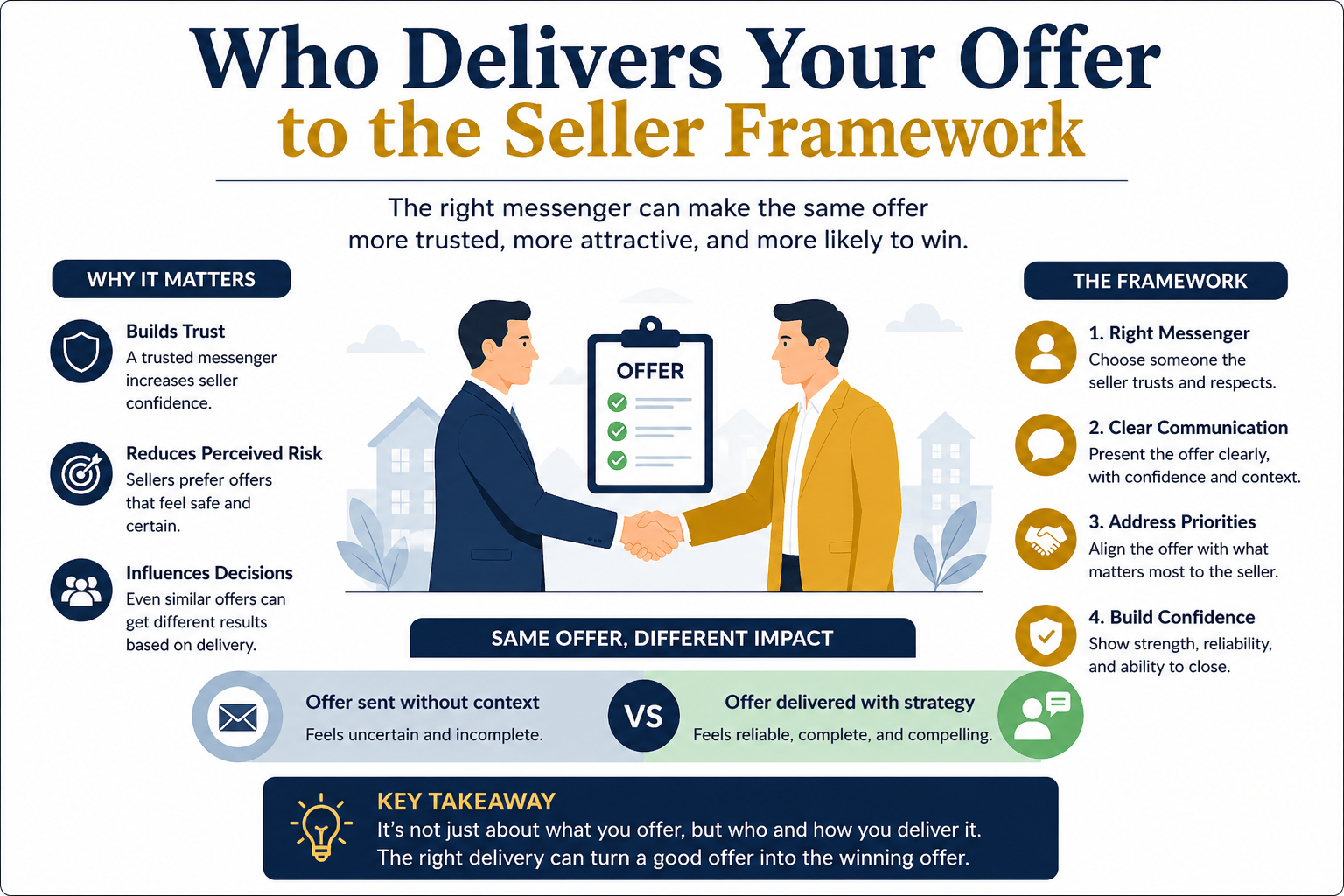
This is where the who delivers your offer to the seller framework becomes important. It is a strategic approach built around one simple idea—the messenger can shape the message. The person presenting your offer can influence how the seller perceives its value, reliability, and seriousness.
Whether you are buying real estate, negotiating a business acquisition, making procurement offers, or even pitching freelance contracts, understanding this framework can give you a competitive edge.
This guide explains how the framework works, why it matters, and how to apply it effectively in real-world negotiations.
What Is the Who Delivers Your Offer to the Seller Framework?
The who delivers your offer to the seller framework is a negotiation strategy that evaluates the role of the person presenting an offer to the seller and how that impacts the final decision.
Instead of viewing offer delivery as a neutral step, this framework treats it as part of persuasion.
The principle is simple.
When a trusted person communicates an offer, the seller often receives it with greater confidence. The same terms, delivered by someone credible and skilled, may be seen as stronger than an identical offer delivered poorly.
This framework focuses on three factors:
Credibility of the Messenger
Sellers respond differently depending on who presents the offer. A respected broker, experienced agent, attorney, or trusted intermediary can increase confidence.
Quality of Communication
How the offer is framed matters. Is it presented as flexible, secure, and attractive? Or as rigid and uncertain?
Relationship Influence
People trust people they know. Existing relationships often affect how offers are interpreted.
This is why two similar offers can have very different outcomes.
Why This Framework Matters in Negotiation
Many deals are not won on price alone.
Studies in negotiation psychology suggest trust and perceived certainty often rank alongside financial terms in decision-making. Sellers frequently choose an offer they believe is more likely to close, even if another offer is slightly higher.
That happens because risk matters.
A seller may ask:
Will this buyer follow through?
Will financing collapse?
Will delays happen?
Will this create stress?
The person delivering the offer can help answer those concerns before they become objections.
That is where the framework creates value.
The Psychology Behind Offer Delivery
Humans do not make decisions purely through logic.
Behavioral economics has repeatedly shown people respond to framing, authority, and social trust.
The who delivers your offer to the seller framework applies those principles.
Authority Bias
People give more weight to information delivered by perceived experts.
If a seasoned professional presents your offer and explains its strengths, the seller may value it more.
Trust Transfer
When a seller trusts the messenger, some of that trust transfers to the buyer.
This can reduce resistance.
Framing Effect
The same offer can sound different depending on how it is introduced.
Compare these examples:
Offer A:
“This buyer submitted $500,000.”
Offer B:
“This buyer submitted $500,000 with strong financing, flexible timing, and minimal contingencies, making it a reliable closing option.”
Same offer.
Different impact.
That difference is the framework at work.
How the Framework Works in Real Estate
Real estate is where this concept is often discussed most.
Imagine multiple offers on a property.
One buyer sends paperwork electronically with little explanation.
Another buyer’s agent calls the listing agent directly, explains why the buyer is serious, highlights financial strength, and addresses seller priorities.
Which feels stronger?
Often the second.
That is not manipulation.
It is strategic communication.
In competitive markets, this can influence outcomes.
Example
Suppose two buyers submit nearly identical offers.
Buyer One offers slightly more money.
Buyer Two uses an experienced agent who communicates:
The buyer is pre-approved.
Closing can happen in 21 days.
Inspection requests will be limited.
The seller’s preferred move-out date will be honored.
Even at a slightly lower price, Buyer Two may win.
Why?
Reduced perceived risk.
Applying the Framework in Business Deals
This strategy extends far beyond property.
In mergers, partnerships, and procurement deals, who presents an offer often affects acceptance.
A founder presenting directly may create authenticity.
An investment banker may create authority.
A respected mutual contact may create trust.
The right messenger depends on the deal.
When a Direct Approach Works
Direct delivery often works when:
Personal rapport matters.
The deal depends on vision.
The seller values relationship over price.
The buyer wants transparency.
This is common in founder-led acquisitions.
When an Intermediary Works Better
Using an intermediary can be stronger when:
The negotiation is complex.
Emotions run high.
Expert credibility matters.
A neutral buffer is needed.
Sensitive terms must be positioned carefully.
This often happens in larger transactions.
Core Elements of a Strong Offer Delivery Strategy
To use the who delivers your offer to the seller framework, focus on these elements.
Choose the Right Messenger
Not every deal needs the same person delivering the offer.
Ask:
Who does the seller trust?
Who has influence?
Who can explain value best?
Who can handle objections?
The answer guides the messenger.
Align the Message With Seller Priorities
Sellers do not all want the same thing.
Some prioritize speed.
Some want certainty.
Some want convenience.
Some want maximum price.
A strong messenger communicates how your offer matches those priorities.
Prepare the Narrative
Do not let your offer stand as raw numbers.
Build context.
Explain why it works.
Show why it reduces risk.
Position value clearly.
That is where many buyers fail.
Common Mistakes That Weaken Offers
Even strong offers lose power when delivery is mishandled.
Treating Delivery as a Formality
Many assume submitting paperwork is enough.
It often is not.
Presentation matters.
Choosing the Wrong Representative
An inexperienced or unprepared messenger can damage perception.
Poor communication creates doubt.
Ignoring Seller Motivation
If the seller values speed but your messenger emphasizes price, alignment is lost.
Over-Selling
Aggressive hype can create skepticism.
Credibility matters more than pressure.
Real-Life Example of the Framework in Action
Consider a small business sale.
A buyer offers fair market value.
Another buyer offers slightly less but uses a respected industry advisor known to the seller.
The advisor presents the offer, explains long-term continuity, and reassures the seller employees will be retained.
The seller accepts the lower offer.
This happens more often than people realize.
The decision was shaped by trust and messaging.
Not just money.
Can This Framework Help in Competitive Bidding?
Yes.
Especially when multiple offers exist.
In bidding environments, sellers compare more than numbers.
They compare confidence.
This framework can help your offer appear stronger through:
Clearer positioning
Better risk reduction
Stronger trust signals
More persuasive presentation
That can influence close decisions.
How Sellers View Offers Differently
Sellers often evaluate offers through emotional filters.
They may ask:
Does this buyer seem serious?
Will this deal cause headaches?
Does this feel safe?
Can I trust this process?
The messenger often answers these questions before the seller consciously realizes it.
That is why delivery matters.
How to Use This Framework Before Making an Offer
Before submitting, ask:
Who should present this offer?
What concerns might the seller have?
How should those concerns be addressed?
What story supports the numbers?
What does the seller value most?
This simple preparation can improve outcomes.
Modern Negotiation and Digital Offer Delivery
Technology has changed transactions.
Many offers now move through digital platforms.
But the framework still matters.
Email alone does not replace persuasion.
Video calls, strategic phone discussions, personalized cover letters, and professional representation can still shape outcomes.
Even in digital negotiations, people make human decisions.
That has not changed.
Is This Ethical?
Yes—when used honestly.
This framework is not about deception.
It is about effective communication.
You are not changing terms.
You are improving how legitimate value is understood.
That is ethical negotiation.
In fact, failing to communicate value clearly can be a disadvantage.
Who Should Use This Framework?
This strategy helps:
Home buyers
Real estate investors
Business buyers
Procurement professionals
Entrepreneurs
Freelancers pitching contracts
Anyone negotiating meaningful offers
If a decision-maker must choose between offers, the framework can matter.
Signs the Framework May Be Critical in Your Deal
It becomes especially important when:
There are competing offers.
The seller seems risk-averse.
Relationships influence outcomes.
The transaction is high value.
The deal involves emotional factors.
Price alone is unlikely to decide the outcome.
In these cases, ignoring delivery can be costly.
Future Trends in Offer Strategy
Negotiation is becoming more relationship-driven, not less.
Data, automation, and AI may streamline transactions, but trust remains central.
That means strategic offer delivery will likely grow more important.
Sophisticated buyers increasingly focus not only on what they offer, but how the offer reaches the seller.
That is exactly what this framework addresses.
How to Strengthen Your Next Offer
Use this practical approach.
First, identify seller priorities.
Second, choose the best messenger.
Third, frame your offer around value and certainty.
Fourth, anticipate objections before they arise.
Fifth, ensure the offer is delivered with clarity and professionalism.
These steps often improve perceived strength without changing price.
That is leverage.
Conclusion
The who delivers your offer to the seller framework reminds us that negotiation is not only about terms.
It is also about trust, communication, and perception.
The person presenting your offer can shape how the seller interprets risk, value, and credibility.
In many cases, that can influence whether your offer wins.
If you want stronger outcomes, do not focus only on what you are offering.
Pay equal attention to how—and by whom—it is delivered.
That small shift can produce major results.
Before making your next offer, apply this framework and position your proposal to stand out.
Frequently Asked Questions
What does who delivers your offer to the seller framework mean?
It is a negotiation strategy focused on how the person presenting an offer can influence how the seller perceives and evaluates it.
Does the messenger really affect whether an offer gets accepted?
Yes. Trust, credibility, and communication can shape decisions, especially when offers are similar.
Is this framework only used in real estate?
No. It can apply to business acquisitions, procurement, partnerships, and contract negotiations.
Should buyers always use an intermediary?
Not always. Sometimes direct communication works better. The right approach depends on the deal structure and seller dynamics.
Can this help win in multiple-offer situations?
Yes. Strong delivery can make an offer appear more reliable and attractive, even against higher bids.
Is offer presentation more important than price?
Price matters, but in many negotiations certainty and trust can influence decisions just as much.
How do I choose the best person to deliver my offer?
Choose someone with credibility, communication skill, and ideally trust or influence with the seller side.

